
ReBokeh App Reinforces Accessibility at The Dot Experience
Envisioning Accessibility
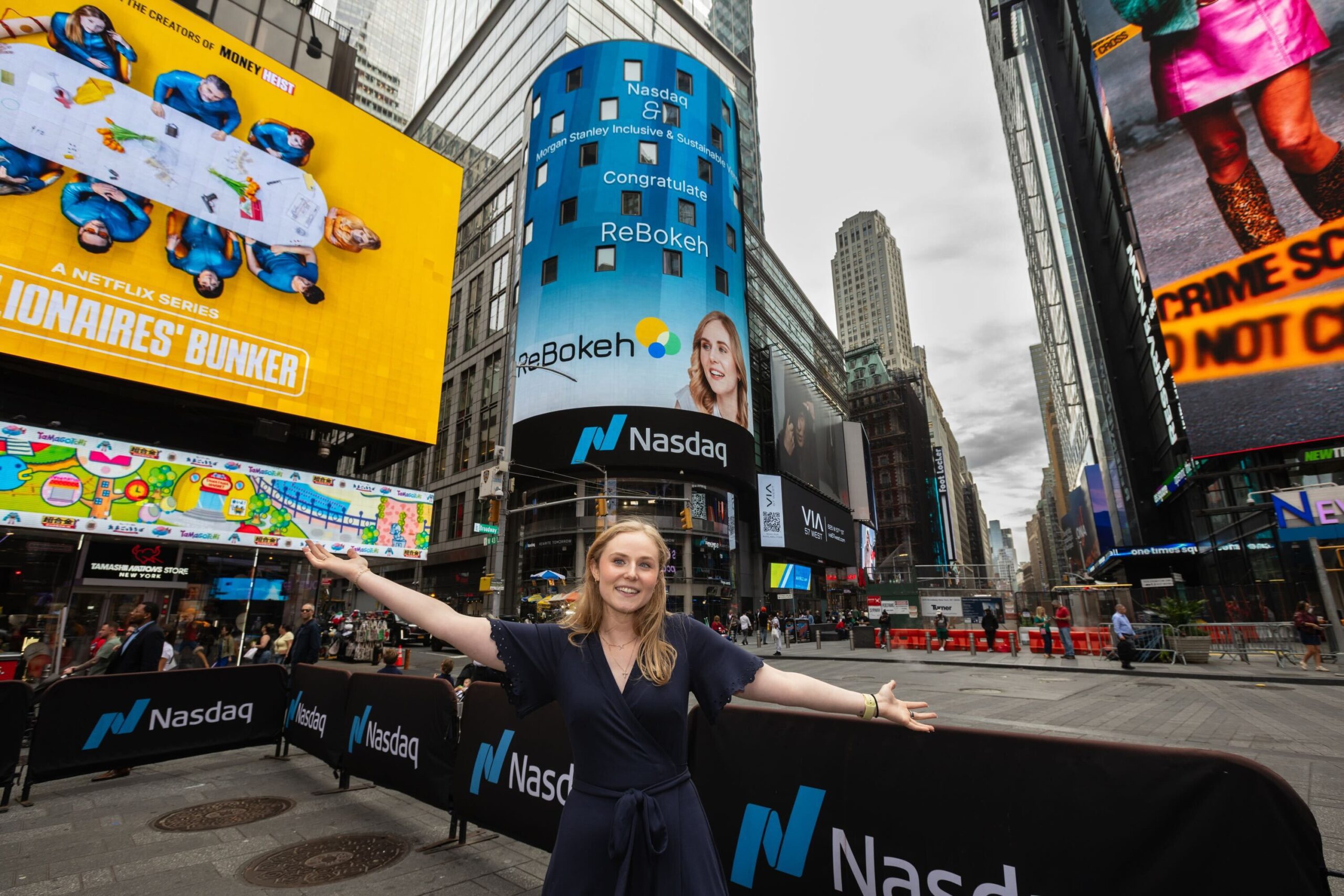
Diagnosed with Oculocutaneous Albinism when she was only a few months old, Rebecca Rosenberg has always lived with vision loss. Although she was offered many assistive technologies throughout her school years, none of them ever truly met her needs. Instead, they tended to bypass her remaining vision altogether, defaulting strictly to audio options.
At the age of 17, Rosenberg walked into a technology meeting aimed at assisting college-bound students who are blind or low vision, only to realize that her only feasible option was a standard audio recorder. That moment became the inspiration for ReBokeh, an augmented smartphone app and tool that Rosenberg developed out of her college dorm room. “I built something I wanted for me, and it turned out other people liked it,” said Rosenberg. “ReBokeh was created so that every person with low vision can feel seen, knowing there is technology available that is truly meant for them.”
Extending Accessibility’s Reach
Accomplishing what no other tool has, ReBokeh helps individuals with low vision utilize their functional site. However, one of the biggest challenges Rosenberg faces is educating the general population on just how large the low vision population is. “We estimate that there are around 25 million Americans who have low vision and about 250 million people worldwide,” Rosenberg explained. “While we may already be providing accessibility that works for the community of people who are blind, people with low vision actually need very different, separate accessibility options because of the way in which we’re trying to achieve accessibility for that particular population.” Today, the technology Rosenberg developed is being used in over 115 countries.
Available as a free download on both iOS and Android for individual users worldwide, the full version of ReBokeh features a conversational AI assistant that describes surroundings, answers questions, and translates text or signs in real time. It offers extended real-time video filtering via the smartphone’s live camera feed to overlay custom visual adjustments including contrast, lighting, exposure, zoom, color hue, saturation, inversion, and grayscale. Furthermore, users can freeze frames, take pictures, import images, save custom filter presets for later use, and leverage robust upload and download tools to adjust file formats.
Experiencing Accessibility
Having already collaborated with the American Printing House (APH)’s technology team when plans for The Dot Experience were first unveiled in 2022, it was a natural fit for ReBokeh to help make the space accessible. “As we’re thinking about the development of a museum, we’re thinking about what it looks like, how it’s laid out, and how people are able to navigate around the space,” said Rosenberg.
With APH and The Dot Experience sponsoring the ReBokeh All-Access program, visitors can use the enterprise version of the app entirely for free during their museum visit. By geofencing the museum, the teams created a digital geographic boundary. When guests step inside the museum, their devices will automatically recognize the partner site and instantly unlock the app’s premium features. Rosenberg is looking forward to seeing how the setup, implementation, and marketing of The Dot Experience shifts industry standards. “APH is taking accessibility seriously as an important, legitimately needed, prioritized budget item,” said Rosenberg. “That is something that I would love to see across all kinds of different spaces.”
“Knowing that The Dot Experience aims to not only be accessible, but to showcase the blind or low-vision experience—with ReBokeh included from day one rather than tacked on years later—is incredibly exciting,” she said. “Enabling people who are blind or low vision to engage with the history, technology, and people that are relevant to them, and serving as a global beacon for those with low vision, is something we are really proud of.”
Rebecca currently resides in Baltimore, MD, with her Australian Shepherd, Stella. You will find her working around the clock. When she does take a break to travel, it is still mostly for business. To keep up with Rebecca and her latest innovations, you can follow her on Instagram, LinkedIn, or visit her official website.